.png)
Beyond Outsourcing: The Case for Integrated Global Contract Manufacturing

Updated: 4 days ago
Why the old model was designed for the audition, and not much else.
For decades, American OEMs outsourced production under a single, seductive promise: cheaper. Send the work overseas to lower wages, lower overhead, and fewer regulations, and the savings would flow back as margin. It worked, until it didn't. The pandemic exposed what supply chain professionals had quietly known for years: the cheapest model and the most resilient model are rarely the same, and the difference shows up not at the start of a product's life, but later, when certainty of supply becomes paramount.

SIG's China and Malaysia manufacturing teams.
The first build is an audition. What comes after is where a manufacturing partner earns its place.
Most contract manufacturers can prove, in a single production run, that a product is physically makeable. What they cannot prove is whether it can be made reliably at scale, across market cycles, through supply chain disruptions, in ways that protect the customer. Traditional outsourcing was designed for the audition. It was never designed for everything else.
Integrated global contract manufacturing is built on a different premise. Rather than handing a product off to a factory and monitoring it from a distance through layers of brokers and representatives, an integrated partner owns the end-to-end relationship: sourcing strategy, engineering/DFM feedback, capacity planning, quality systems, global logistics, and domestic stocking. It operates as an extension of the OEM, not a vendor at arm's length.
The distinction sounds abstract until something goes wrong.
Supply chain concentration, manufacturing in a single country or region, has become one of the clearest business risks of the past several years. Geopolitical tension, labor volatility, and logistics bottlenecks have turned theoretical exposure into real impacts on financial performance and customer satisfaction. The companies that weathered these disruptions best were those whose partners could reallocate volume across regions without rebuilding qualifications from scratch. Redundancy was built in through a single manufacturing partner, rather than bolted on as a patchwork.
Framing global manufacturing solely as a cost play misses the point. Price competitiveness is table stakes, but resilience determines whether a relationship lasts. An OEM that selects a contract manufacturer on price alone is optimizing for the audition and leaving the hard part, years of stable production, to chance.
What OEMs are recognizing is that "outsourcing," with its connotations of distance, hand-offs, and diffuse accountability, describes a model many of them have already moved past. The partnership they are looking for is embedded, not transactional: shared metrics, transparent communication on lead times and inventory exposure, incentives aligned to long-term outcomes rather than short-term throughput.
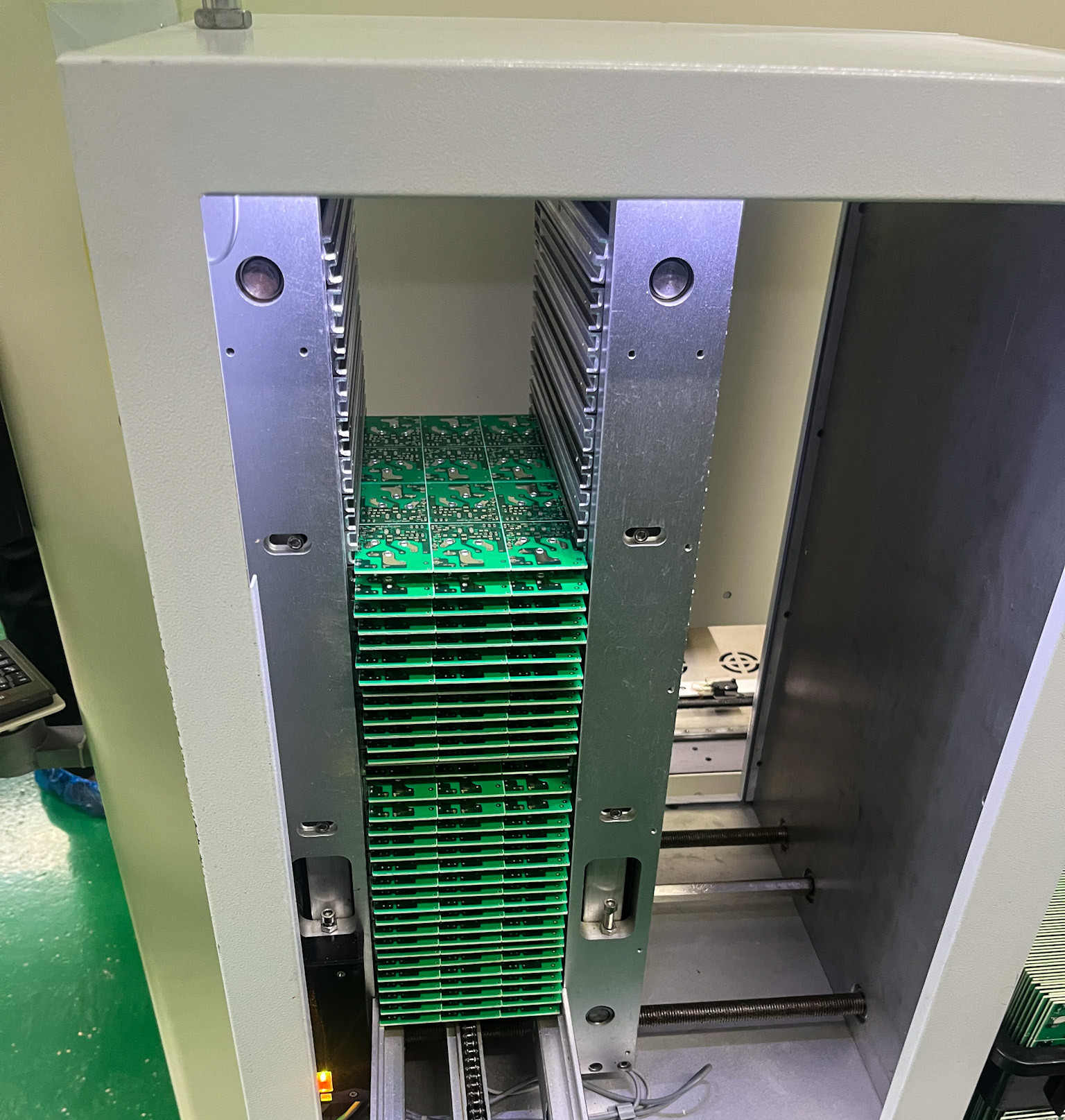
The first build proves a product can be made. What follows, the scaling, the adaptation, the years of decisions that determine whether a product endures, is where the choice of partner matters.
SIG Sourcing provides integrated global contract manufacturing services by combining China- and Malaysia-based manufacturing with US-based support and domestic stocking.
For further information about SIG Sourcing, view the attached PDF or contact us at info@sigsourcing.com.


Comments